
Introduction: Can You Really Exercise Your Way to a Sharper Brain?
We often treat the aging brain as a fixed asset—a structure destined to slowly depreciate regardless of our lifestyle choices. But is this decline truly inevitable, or are we simply failing to provide the necessary stimulus for maintenance? The latest research suggests that the relationship between physical exertion and mental acuity is far more nuanced than a simple cause-and-effect equation.
When we look at the data from the 2022 randomized controlled trial involving sedentary older adults, the results challenge the popular narrative that aerobic exercise is a universal panacea for brain atrophy. While we observed that participants who boosted their cardiorespiratory fitness saw tangible gains in cognitive performance and regional cortical thickness, the study also revealed a sobering reality: a year of dedicated aerobic training did not halt the natural, age-related reduction in total brain volume. In fact, both the aerobic and the stretching-and-toning groups experienced similar structural changes.
This forces us to ask a difficult question: if the physical architecture of the brain continues to shift despite our best efforts, what exactly are we achieving when we lace up our sneakers? The answer lies in the functional correlation between oxygen uptake and cognitive processing. It appears that while we may not be able to stop the clock on structural aging, we can certainly influence the efficiency of the neural pathways that remain. You aren’t necessarily building a “new” brain, but you are undeniably optimizing the one you have.
The Science: Breaking Down the Latest One-Year Randomized Controlled Trial
To understand the granular mechanics of this trial, we must look past the headline-grabbing conclusions and examine the specific metrics that moved the needle. The researchers utilized a rigorous composite score—a weighted average of eight distinct neuropsychological tests—to capture a holistic view of cognitive health. This wasn’t just about memory; it spanned inductive reasoning, processing speed, and executive function. By tracking these variables alongside MRI-derived data, the team sought to determine if the brain’s physical volume and its functional output were moving in lockstep.
The findings offer a compelling, if complex, dichotomy. While the aerobic group achieved a significant 10% increase in peak oxygen uptake (VO2), the stretching-and-toning cohort served as a surprisingly potent active control. Both groups demonstrated cognitive gains over the twelve-month period. This suggests that the act of engaging in a structured, consistent physical program—regardless of whether it is high-intensity aerobic work or lower-impact toning—may provide a cognitive “floor” that prevents the rapid decline often associated with sedentary behavior.
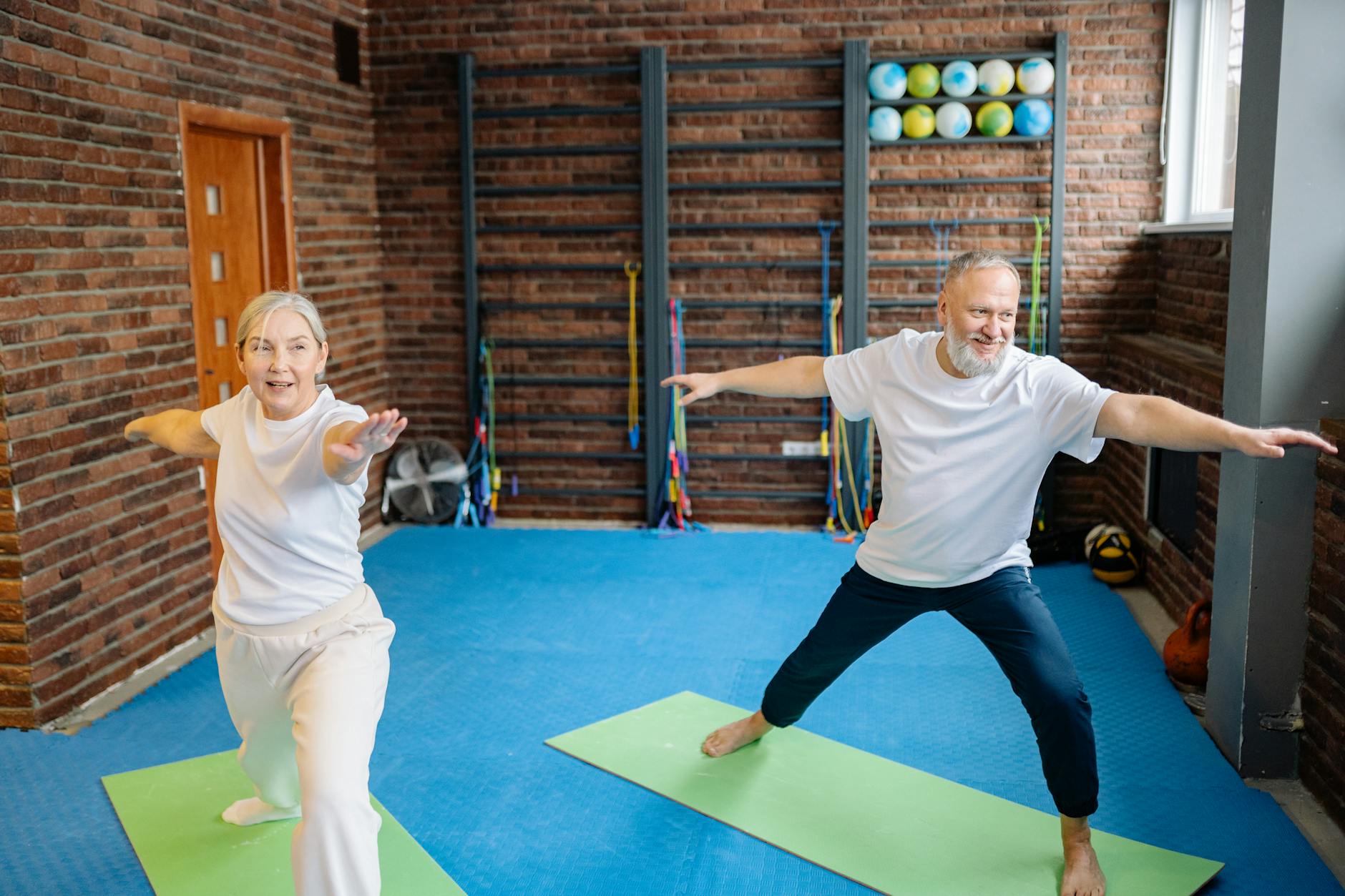
However, the structural data provides the necessary friction to our optimism. The study found that total brain volume and mean cortical thickness declined across the board, irrespective of the exercise modality. Even more counterintuitively, the stretching group actually showed a smaller reduction in hippocampal volume compared to those in the aerobic group. This forces us to reconsider the “more is better” mantra. It implies that the relationship between exercise and brain health is not linear. Instead, we are likely looking at a threshold effect where the benefits of movement are realized through consistency and engagement, rather than just the intensity of the cardiovascular strain.
Ultimately, the correlation between VO2 gains and the thickening of the inferior parietal lobe is the most promising takeaway. It suggests that while we may not be able to arrest the global structural atrophy of aging, we can target specific, high-value regions of the cortex through improved cardiorespiratory fitness. You are not fighting a losing battle against biology; you are strategically allocating your physiological resources to preserve the neural real estate that matters most for daily cognition.
Beyond the Gym: Why Fitness Gains Are the Real Key to Cognitive Health
If you are still fixated on the specific modality of your workout—debating whether to prioritize the treadmill or the yoga mat—you are missing the forest for the trees. The data suggests that the “how” of your movement is secondary to the physiological adaptation it triggers. When we look at the correlation between peak oxygen uptake and cognitive performance, we see that the brain cares less about the brand of your sneakers and more about your body’s capacity to deliver oxygenated blood to the cortex.
Think of your cardiorespiratory fitness as the primary currency of cognitive maintenance. When you improve your VO2, you are essentially upgrading the supply chain that feeds your neural networks. This is why the 2022 trial results are so revealing: the cognitive benefits were tied to the gains in fitness, not just the participation in a specific exercise class. If you aren’t pushing your cardiovascular system to adapt, you aren’t unlocking the cognitive dividends that come with improved oxygen utilization.
How to translate this into your daily life:
- Prioritize Intensity Progression: It is not enough to simply “be active.” To see the cognitive benefits linked to cortical thickness, you must periodically challenge your cardiovascular system. If your heart rate never climbs, your brain isn’t receiving the signal to optimize its functional efficiency.
- Focus on Measurable Gains: Don’t just track your steps. Track your recovery time or your ability to sustain a slightly higher pace. These metrics are proxies for the very oxygen uptake improvements that correlate with better executive function.
- Consistency Over Complexity: The study showed that even the stretching group saw cognitive improvements, likely due to the discipline of a structured routine. If you find a high-intensity program too daunting, start with a consistent, lower-intensity habit. The “cognitive floor” is built through regularity, not just sweat.
Ultimately, your goal should be to foster a physiological environment where your brain has the resources to thrive. By focusing on your cardiorespiratory health, you are creating a buffer against the cognitive friction of aging. You don’t need to be an elite athlete to reap these rewards; you simply need to be an active participant in your own biological maintenance. When you improve your fitness, you aren’t just training your heart—you are actively investing in the long-term resilience of your parietal lobe and beyond.
The Surprising Truth About Brain Volume and Aging
We have been conditioned to view brain atrophy as a binary outcome: either your brain is shrinking, or you are failing to prevent it. This narrative is not only reductive; it is scientifically incomplete. The 2022 trial forces us to confront a reality that many find uncomfortable: structural decline is a biological constant, even among those who are physically thriving. If you are looking for a magic bullet to stop the physical contraction of your brain tissue, the current evidence suggests that exercise—no matter how rigorous—is not that bullet.
But here is where the nuance shifts. While the total volume of the brain and the mean cortical thickness decreased across all participants, the functional output of those brains did not mirror that decline. We observed cognitive scores rising even as the physical architecture underwent its natural, age-related transition. This disconnect is vital. It suggests that the brain is not a static vessel that loses utility as it loses mass. Instead, it is a dynamic system capable of compensatory reorganization.
Consider the hippocampal findings. The fact that the stretching-and-toning group experienced a smaller reduction in hippocampal volume compared to the aerobic group is a profound anomaly. It challenges the assumption that high-intensity cardiovascular strain is the only path to neuroprotection. It implies that the brain’s structural integrity may respond to a wider variety of stimuli than we previously credited, including low-impact, consistent movement.
What this means for your perspective on aging:
- Decouple Volume from Function: Stop equating a smaller brain with a “worse” brain. Your cognitive performance is determined by the efficiency of your neural networks, not just the raw volume of your gray matter.
- Accept the Biological Baseline: Structural aging is a feature of the human condition, not a failure of your personal health regimen. By accepting this, you can shift your focus from the impossible task of “stopping” aging to the highly achievable task of “optimizing” function.
- Value Regional Resilience: While global volume may decrease, the correlation between fitness and the thickness of the inferior parietal lobe proves that you can still influence specific, high-value areas. You are not helpless; you are simply operating within a system that requires strategic maintenance rather than total preservation.
You are not fighting to keep your brain in its youthful, original state. That is a battle against time itself. Instead, you are working to ensure that the neural pathways you rely on for reasoning, memory, and speed remain robust and well-supplied. The structural changes are happening, yes—but they do not have to dictate the quality of your cognitive life.
3 Actionable Steps to Boost Your Brainpower Through Movement
You have the data, and you have the context. Now, you need a blueprint. If we accept that the goal is not to stop the clock but to optimize the machinery, we must move away from generic advice and toward targeted, physiological interventions. Based on the latest evidence, here is how you can refine your movement to support your cognitive longevity.
1. Implement “Cognitive Load” Intervals
Since we know that improvements in peak oxygen uptake are tied to better executive function, you need to stop coasting. Once a week, integrate a session where you push your heart rate into a zone that makes conversation difficult. This isn’t about punishing your body; it is about forcing your cardiovascular system to adapt. When you challenge your heart to deliver more oxygen, you are effectively signaling your brain to maintain its functional efficiency. Aim for short bursts of high-intensity effort followed by active recovery, ensuring you are consistently nudging your VO2 ceiling upward.
2. Prioritize “Brain-Body” Coordination
The surprising resilience of the hippocampus in the stretching-and-toning group suggests that movement requiring focus and spatial awareness—not just repetitive motion—may offer unique neuroprotective benefits. Incorporate activities that demand coordination, such as tai chi, dance, or complex yoga sequences. These modalities require your brain to map movement in real-time, engaging the parietal lobe and other cortical regions. You aren’t just moving; you are practicing neural recruitment.
3. Establish a “Non-Negotiable” Baseline
The most dangerous enemy of cognitive health is the sedentary “floor.” The study demonstrated that even the active control group saw cognitive gains, likely because they committed to a consistent, structured routine. You don’t need to be a marathon runner, but you do need to be a creature of habit. Schedule your movement as if it were a medical appointment. Whether it is a brisk walk or a toning session, the regularity of the stimulus is what prevents the rapid decline associated with inactivity. Consistency is the bedrock upon which all other physiological gains are built.
Remember, you are not looking for a miracle. You are looking for a strategy. By combining high-intensity cardiovascular challenges with coordination-heavy movement and unwavering consistency, you are creating the optimal environment for your brain to function at its peak, regardless of the structural changes occurring beneath the surface.
Conclusion: Rethinking Your Routine for Long-Term Cognitive Vitality
We have spent decades searching for the fountain of youth in a bottle or a supplement, yet the evidence points to a much more accessible, albeit demanding, solution. The takeaway from the 2022 trial is not that exercise is a miracle cure for the aging brain, but that it is a powerful tool for functional optimization. We must stop viewing our cognitive health as a static state that we either possess or lose. Instead, think of it as a dynamic process that requires constant, intentional input.
If you walk away with one realization, let it be this: the structural changes in your brain—the subtle shifts in volume and thickness—are not the end of the story. They are merely the backdrop. Your cognitive performance is the narrative you write every day through your habits. By choosing to move, you are not just burning calories; you are actively deciding which neural pathways to keep sharp and which to let fade.
The path forward requires a shift in mindset:
- Stop chasing perfection: You do not need to halt the biological clock to remain sharp. You only need to ensure that your brain’s functional efficiency outpaces the rate of structural change.
- Embrace the “Active” Lifestyle: Whether you prefer the intensity of a heart-pumping run or the deliberate focus of a stretching routine, the most effective exercise is the one you actually perform. The “cognitive floor” is built on the foundation of your commitment, not the complexity of your workout.
- Measure what matters: Shift your focus from the scale to your capacity. Can you sustain a higher intensity for longer? Can you coordinate complex movements with ease? These are the real-world indicators that your brain is receiving the oxygen and the neural stimulation it craves.
You are the architect of your own cognitive longevity. While biology dictates the structural constraints, you hold the keys to the functional output. By integrating consistent, challenging, and varied movement into your life, you are not just aging—you are evolving. Take the data, apply the principles, and trust that every session you complete is an investment in the most valuable asset you own: your mind.
Scientific References
This article was developed based on peer-reviewed research. For more detailed clinical data, please refer to the original study:
Support Our Research
If you found this evidence-based article helpful, consider supporting Dr. Julian Hayes and The Health Desk’s mission to make scientific research accessible to everyone.
☕ Support with Credit Card or Crypto
Secure payments via NOWPayments.